Everything Is a Meme Until It Isn't
From brainrot to AI accusations to news delivered as punchlines, the internet keeps turning life into content. What happens when the joke starts doing real work?
There is a meme for everything.
Your friend cancels plans? There is a meme.
Your boss schedules a meeting to discuss why there are too many meetings? There is definitely a meme.
The world is falling apart? Someone has already found a reaction image for that.
At this point, I wouldn’t be surprised if someone made a meme about this article while reading it.
And somehow, we understand them. A badly cropped screenshot, a movie dialogue taken out of context, or a man staring into the distance can communicate what would otherwise require an entire paragraph.
Sometimes, the meme is the conversation.
Take Schmooze, a dating app that matches people based on their sense of humor through the memes they enjoy. Apparently, even flirting has become a meme-based activity. Why list your interests when you can find out whether someone laughs at the same nonsense you do?
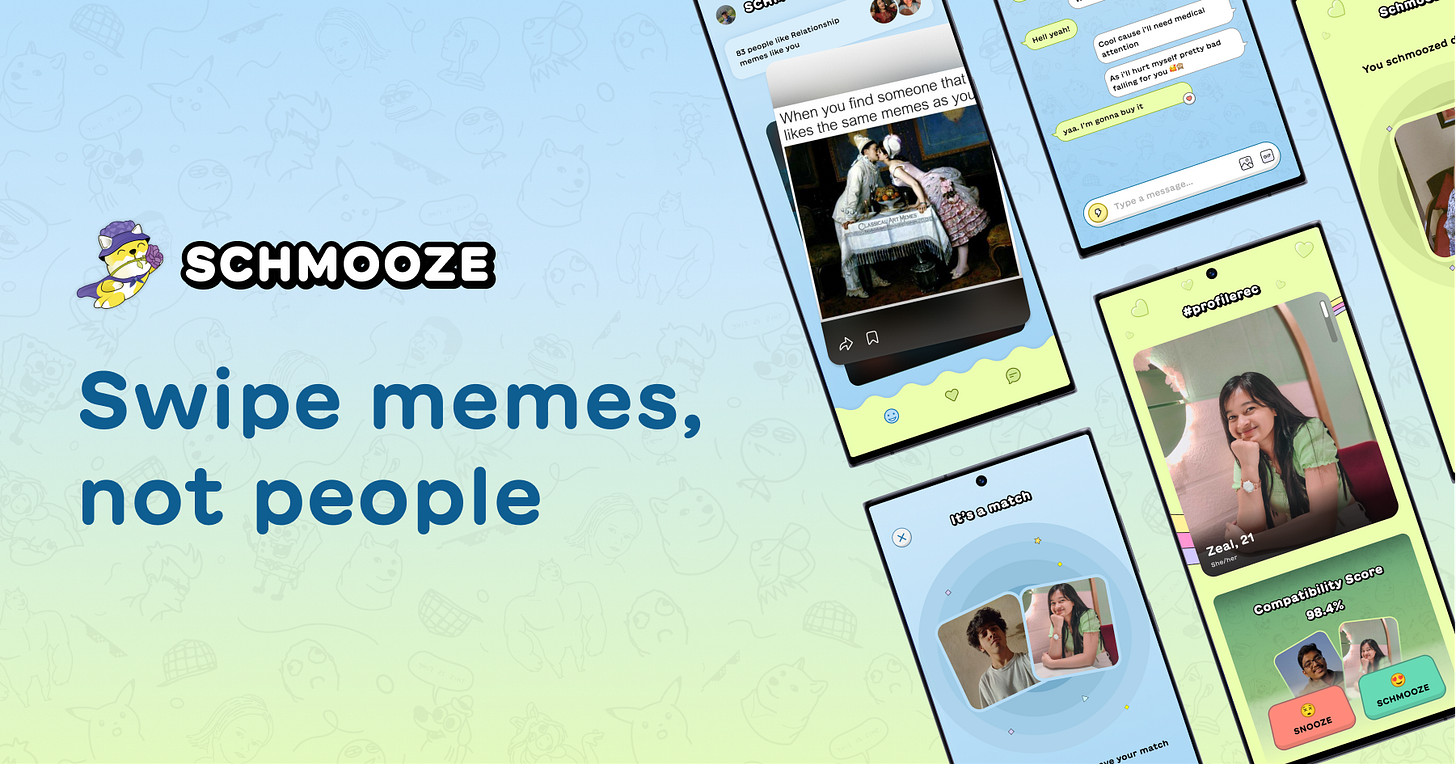
Perhaps compatibility is finding someone who understands why a raccoon wearing sunglasses is the funniest thing you’ve seen all day. Or perhaps it’s how you end up arguing about memes for the next three years.
Either way, you’ve found something to talk about.
But memes have travelled well beyond flirting and group chats. They’re becoming a way to participate in culture: to remix it, react to it, challenge it, and occasionally turn it into something entirely different.
And that raises a more interesting question than whether the internet has lost its mind.
What happens when the joke starts doing real work?
Welcome to the internet, where everything is content and nothing is safe from becoming a template.
Every generation has its own punchline
Before memes became screenshots with questionable spelling, people were already finding ways to make public life funny.
In India, Amul’s topical advertisements have long turned current affairs into witty illustrations. India Today’s animated satire series So Sorry does something similar with political figures and public controversies.
Today, the process is faster. A politician makes a statement, a celebrity has an unfortunate expression, or a television character delivers a dramatic line. Within hours, the internet has supplied the captions, remixes, and reaction videos.
Remember Yashraj Mukhate turning Saath Nibhaana Saathiya‘s “Rasode Mein Kaun Tha?” scene into a musical phenomenon? An ordinary television exchange became a catchy remix and then a reference people could recognize without explaining the original scene.
The internet didn’t just consume the moment. It remade it.
It’s tempting to divide generations by their humor: political cartoons for older audiences, relatable memes for Millennials, reaction edits for Gen Z, and sounds that make absolutely no sense to anyone outside a Gen Alpha group chat.
But every generation has enjoyed absurdity, shared inside jokes, and mocked authority. The formats change more visibly than the underlying impulse.
Different interfaces. Different references. The same human desire to say, “You saw that too, right?”
If you understand the reference, you’re in on the joke. If you don’t, congratulations: you’ve discovered that the internet has an entrance exam.
Brainrot, but make it creative
Then came brainrot.
Italian brainrot gave us AI-generated characters that look as if someone asked a computer to dream after eating an entire packet of expired mushrooms. Animal-object hybrids, pseudo-Italian names, dramatic narration, elaborate character lore, videos that are difficult to explain and strangely difficult to stop watching.
Indian internet culture has its own flavor of the phenomenon. Songs like “Ice Cream Khaungi,” “Maa Ka Phone,” and “Shaitan Ka Saala” can feel brainrot-adjacent today: the kind of exaggerated, instantly recognizable audio that can escape its original context and become a joke of its own.
Maybe brainrot isn’t a new species of entertainment. Maybe the internet has simply given the old species a new habitat.
What matters is what happens next. Someone remixes a sound. Someone invents a character’s backstory. Someone turns a viral personality into a video game.
Take Ravi Follows, a horror game inspired by Ravi Kishan’s viral memes and catchphrases. A familiar face from interviews and internet edits becomes the star of a horror game. The joke has moved from a clip you watch to an experience you can play. The game was covered by Filmibeat.
Then there’s Jantar Mantar Chalo, a satirical browser game inspired by protests in Delhi. Players can gather a procession, dodge obstacles, avoid detention, and try to reach the protest site; or switch sides and play as the police. Tea stalls, golgappas, and satirical breaking-news headlines add to the absurdity. Read more about the game.
Political frustration, now with gameplay.
Of course, not every brainrot meme is secretly a masterpiece. We don’t need to conduct a literary analysis of that mota haathi who keeps falling into trouble but is somehow your niece’s or nephew’s favorite song.
Still, there’s a difference between the effort behind an original post and what people do with it. The content might be low-effort but the remix might be clever. The joke might be ridiculous and yet the community around it might be creative.
Anyways, now comes the question of getting over brainrot. We discuss digital detoxes, reduced screen time, and the need to touch grass. before opening another app to watch a video explaining why we should stop opening apps.
Even our attempts to escape the internet become content for the internet.
Perhaps brainrot feels normal because it has become part of the everyday feed; something to laugh at, send to a friend, and forget until it resurfaces three weeks later with a different soundtrack.
The same internet that makes it effortless to create something clever makes it effortless to produce a thousand copies. Somewhere between the remix and the repetition, creativity meets the algorithm and asks for a little more reach.
When the joke leaves the screen
During France’s 2023 pension protests, demonstrators carried signs referencing internet culture alongside political slogans. Around the same time, footage of diners eating beside burning rubbish reminded viewers of the “This Is Fine” comic. The diners weren’t recreating the meme; reality had simply walked into a joke that already existed. Le Monde documented the protest signs, while TF1 Info reported on the restaurant footage.
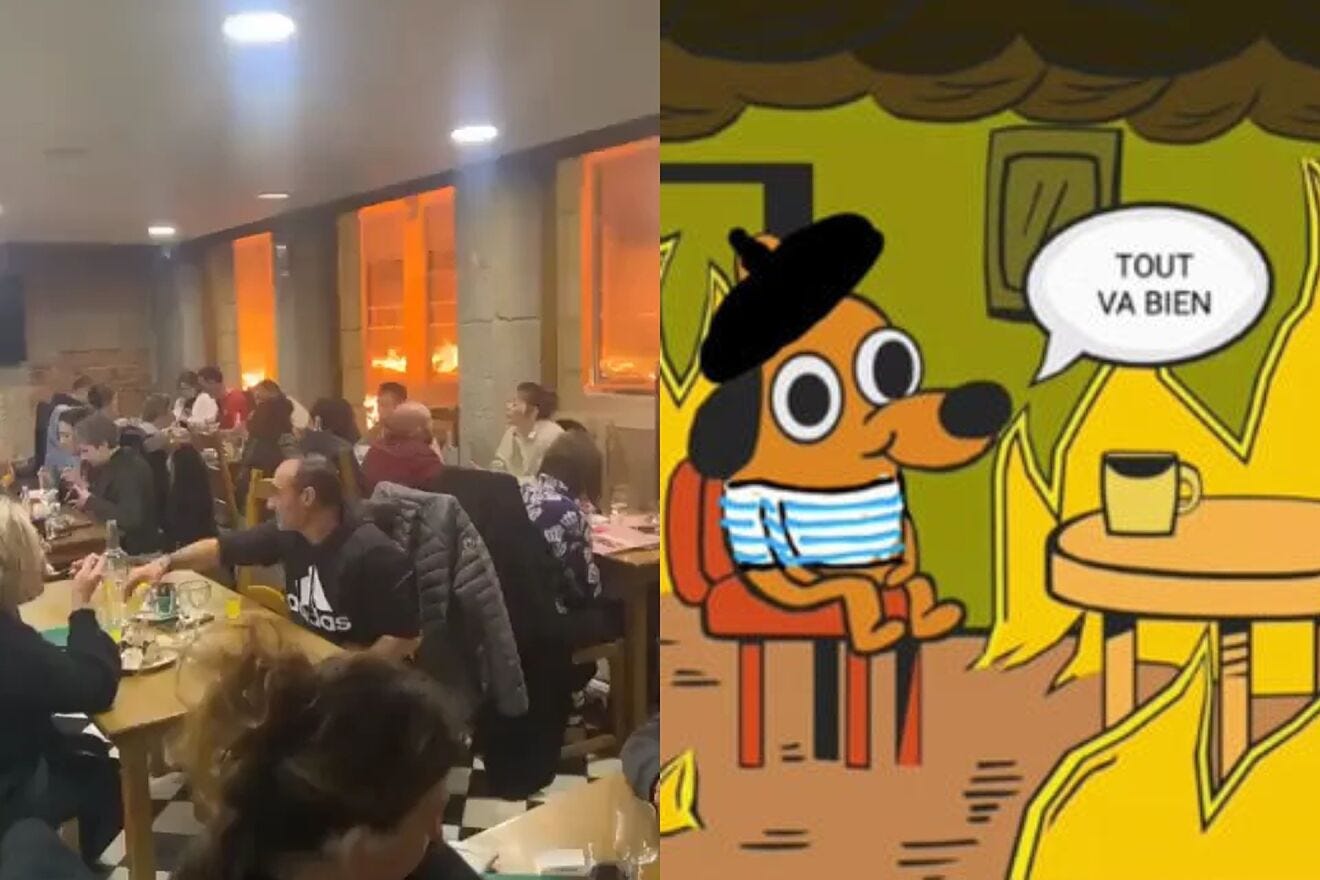
Sometimes we recreate memes. Sometimes reality saves us the production budget.
And sometimes, the meme becomes a way to express frustration. Digital Tapli, a parody game featuring a figure resembling Chief Election Commissioner Gyanesh Kumar, turns political discontent into something users can interact with and share. Here’s the context behind the game.
A digital slap isn’t the same as attending a protest. But from placards to browser games, dissent is finding new formats. The medium may be playful; the frustration behind it need not be.
Memes also shape how people encounter the news. Some discover events through satirical posts rather than conventional reporting. A funny post about a protest might make someone pause, think, Wait, this is actually happening? and look up the story. Someone else might accept the caption as the whole truth and keep scrolling.
Take India’s Cockroach Janata Party, or CJP. The satirical online movement drew on a controversial cockroach comparison made by Chief Justice of India Surya Kant, amid wider frustration over unemployment, rising costs, exam-paper leaks, and political dysfunction. Sometimes the internet sees a cockroach and thinks, “Finally, a party that represents us.” The Associated Press reported on the movement.
The joke became a way to express frustration. But that’s the tension: humor can make serious issues easier to approach, while also flattening them into a punchline.
The same meme can spark curiosity or spread misinformation. The problem isn’t laughing at serious events. It’s mistaking the joke for the whole story.
The meme opens the door. It doesn’t necessarily tell you what’s in the room.
And now, apparently, human creativity looks suspicious
Just when we were getting comfortable with the idea that anyone could become a creator, AI arrived and made the whole situation more interesting.
Now people can generate images, voices, songs, and videos with tools that once required specialized skills or considerable time. Some results are impressive. Some look as though the computer has never encountered a human hand and is making its best guess.
And some are difficult to distinguish from work made by people.
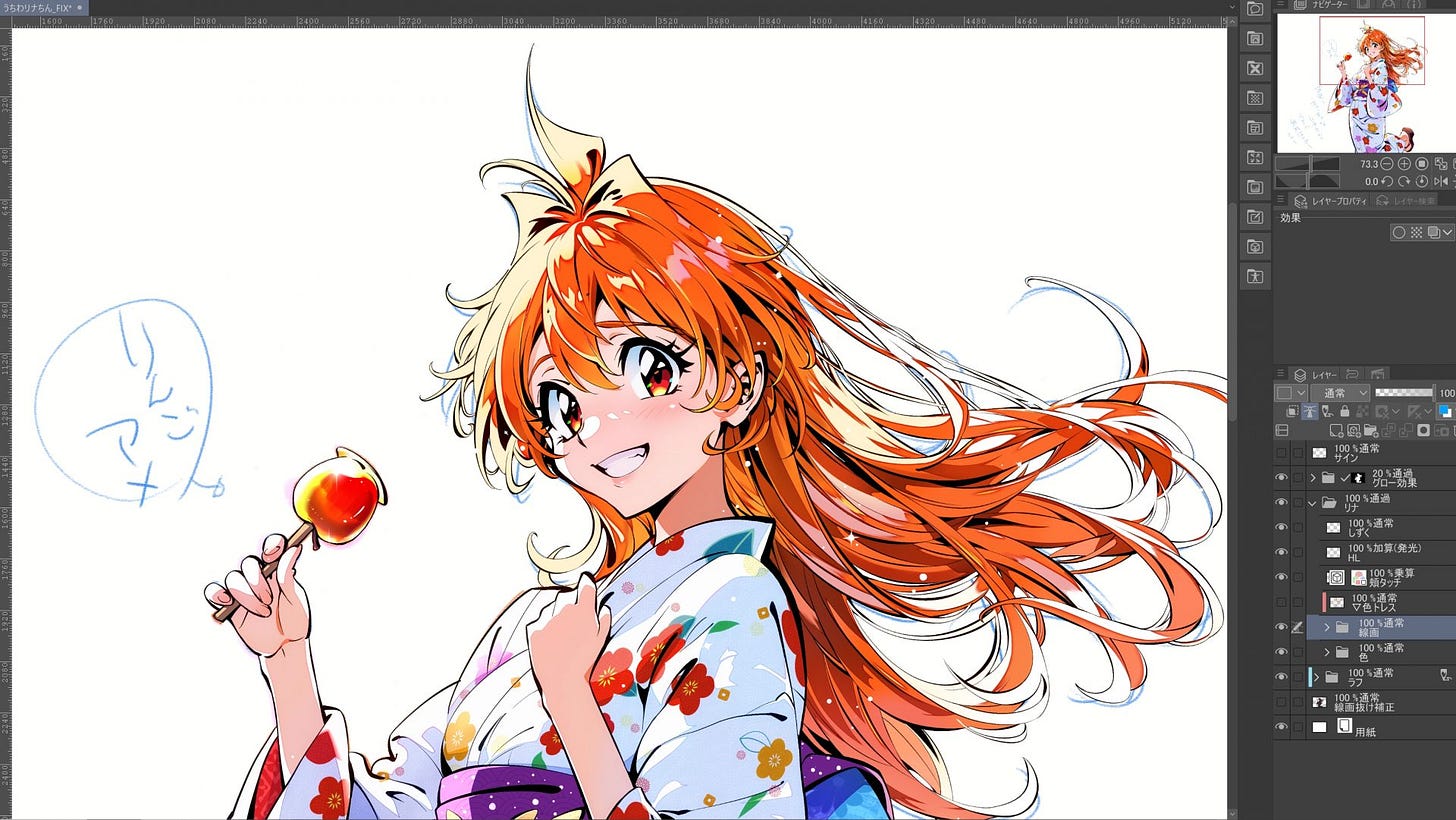
In 2025, artist Ghassane Moutaoukil’s Christmas Stroll poster in Bozeman, Montana, was accused online of being AI-generated. He denied the allegations, saying the work began as a pencil sketch before being developed digitally. Organizers ultimately decided not to distribute it amid the backlash; the accusation was not established as proven fact. The Washington Post covered the dispute.
Compare that with photographer Boris Eldagsen, who revealed that his image submitted to the 2023 Sony World Photography Awards was AI-generated and declined the award to provoke discussion about the boundaries of photography. His own account explains the decision.
One was a disputed accusation; the other, an acknowledged use of AI. Together, they raise a question that is becoming harder to avoid: how do we judge creative work when we can no longer reliably infer how it was made just by looking at it?
Suspicion, however, isn’t proof. An unfamiliar style or an unusually polished image can trigger accusations before anyone knows the process behind it.
Imagine spending years learning to draw, only to have someone tell you that your work looks too good to be human.
Congratulations. Your reward for improving is a public investigation.
AI complicates the relationship between creativity and authenticity. The concern isn’t simply whether a tool was used, but whether the creator is honest about the process; and whether audiences can tell the difference between evidence and assumption.
Soon, an artist’s portfolio might need behind-the-scenes footage, three witness statements, and a signed affidavit from the pencil.
And even then, someone will ask whether the pencil was AI-generated.
The brainrot paradox
I know people who spend hours scrolling through memes, then open chess, Sudoku, or a strategy game to “fire up their grey cells.” Apparently, the brain needs a software update after spending the afternoon watching a cartoon shark speak Italian.
We joke about our attention spans shrinking, but the concern isn’t entirely imaginary. We’re getting used to content that delivers something new every few seconds. Even CoComelon, watched by babies and toddlers, typically changes shots every one to three seconds, according to The New Yorker. Research links heavy short-form video use with attention difficulties, though that doesn’t prove memes have permanently damaged our brains. The New Yorker on CoComelon · Research review on short-form videos
And the meme movement has its downsides, too. Context gets squeezed into captions, outrage becomes entertainment, and yesterday’s political crisis becomes today’s reaction image. We can feel informed without knowing much, connected without having a conversation, and creatively involved while watching the same joke recycled for the hundredth time.
So we try to balance it out. We play puzzles, pick up books, learn chess, or attempt a digital detox; sometimes using an app to track how little we’re using apps. The irony is almost impressive.
Maybe we don’t need to abandon the internet. Maybe we need to pay attention to what we’re doing with it: when we’re creating, when we’re connecting, and when we’re simply being kept scrolling.
Because if meme culture can shape how we pay attention, express frustration, and understand the world, the next question isn’t just what it is doing to us.
It’s what happens next.
So, where does meme culture go from here?
Memes can entertain us, mislead us, bring people together, or give frustration a new outlet. They can be the beginning of a conversation, a substitute for one, or the raw material for something nobody expected.
The question isn’t whether meme culture is good or bad. It’s what we do with it.
Do we follow the joke back to the story? Can we laugh at a parody without confusing it with reality? Can we question AI-generated work without treating suspicion as evidence?
We don’t need to turn every meme into a lesson. The internet is exhausting enough.
But memes are no longer just jokes floating around online. They’re one of the ways we participate in culture; sometimes thoughtfully, sometimes carelessly, and sometimes by giving a digital tapli from the comfort of our couch.
The world is complicated. The internet is weirder.
And somewhere, right now, someone is turning both into a game.
The internet never sleeps. It just changes templates.