
I Can See the Color of Numbers
Synesthesia, neurodivergence, and the private worlds inside ordinary days
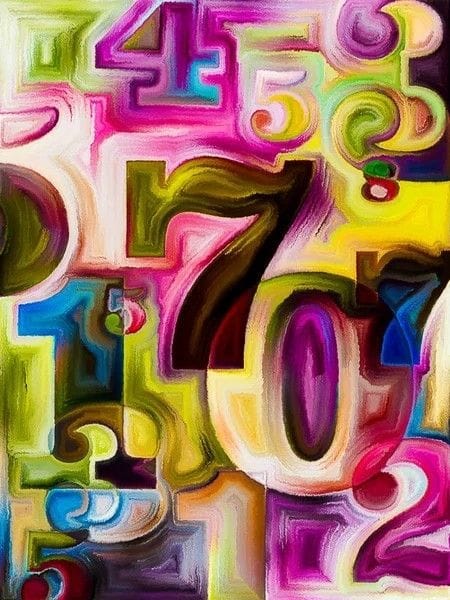
We share the same world, but do we experience it the same way?
It starts with a question so simple it barely counts as one: what color is January?
Blue, obviously. At least, that’s what I would have said, until I watched a comment section fall apart over it. Someone said orange. Someone else insisted on white. Two strangers discovered, with genuine joy, that they both think Wednesday is yellow. Nobody was arguing. Everyone was delighted, as if a private habit they had never mentioned out loud had suddenly been confirmed by a stranger.
That’s the question this piece is built around. Not really what color January is, but something underneath it: if we all live in the same world, why don’t we all experience it the same way?
To answer it, I started with the colors, and followed the research from there.
1880: A paper in Nature
The colors aren’t an internet invention. In January 1880, Francis Galton published a paper in Nature called “Visualized Numerals,” describing people who saw numbers laid out in shapes around them and noting many cases of people associating colors with numerals. These number forms, mental maps of numbers that appear automatically, were later identified as a type of synesthesia.
Synesthesia, from the Greek for “perceiving together,” describes experiences in which one sense or concept automatically brings another with it. In grapheme-color synesthesia, the most studied form, a person might consistently experience the number 4 as blue or the letter A as red. Other forms pair sounds with colors, or arrange sequences like months in space.
So the comment section debating January wasn’t starting a conversation. It was joining one that is nearly 150 years old. Which raised the obvious next question: were all those people in the comments synesthetes?
1.2%: How rare it actually is
Almost certainly not. When researchers gave a standardized synesthesia test to 2,847 people, they found that grapheme-color synesthesia occurs in about 1.2% of the general population.
What separates synesthesia from an ordinary association is consistency. In their review of the neuroscience, Hubbard and Ramachandran noted that synesthetes’ color associations stay more than 90% consistent when retested up to a year later. Ask again months later, and the 4 is still the same blue.
For most of us, what’s happening is association. A song brings back a summer. A smell returns us to a childhood home. My own brain, for years, has quietly paired people’s names with vegetables: hear a name, and a vegetable follows. I assumed that was a strange private quirk. It’s almost certainly an association, not synesthesia. The difference is between something that reminds you of a color and something that arrives with one.
So the colors themselves turned out to be mostly harmless and mostly shared. But the question underneath them didn’t go away. If people can differ this much over something as small as a month, what about everything else we assume is experienced identically?
1 in 31: The differences we don’t see
Consider the scale of it. According to the CDC, an estimated one in 31 eight-year-olds in the US was diagnosed with autism in 2022, up from one in 150 in 2000. Globally, a meta-analysis by Song and colleagues estimated that symptomatic adult ADHD affects 6.76% of adults, around 366 million people.
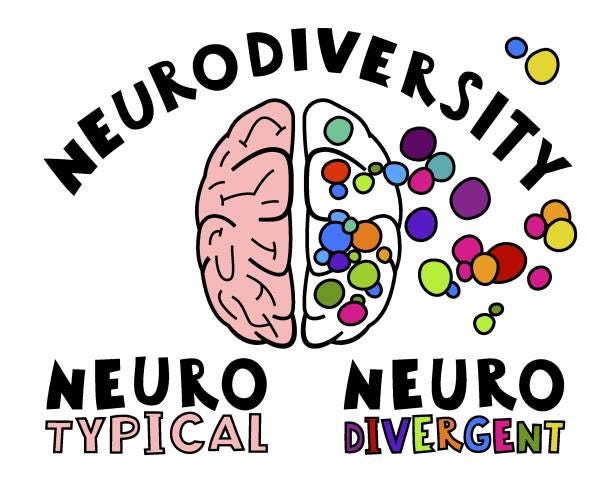
These numbers fall under neurodivergence, an umbrella term for differences in how people process information, experience sensory input, regulate attention and learn. It includes experiences associated with autism, ADHD, dyslexia, dyspraxia and dyscalculia. They are distinct conditions, and no two people experience them in exactly the same way.
Think about a crowded restaurant. One person barely notices the noise. Another struggles to follow the conversation across the table because every nearby voice competes for attention. Same restaurant, different experience. A conversation, a deadline, a bright light or a page of text can demand very different amounts of effort depending on who is dealing with it.
From the outside, we see the behavior. The question is what we’re missing behind it.
29 studies: The work of appearing normal
Some of what we miss is hidden on purpose. A 2021 systematic review by Cook and colleagues examined 29 studies on camouflaging in children and adults with autism or high levels of autistic traits. Camouflaging, or masking, describes hiding or compensating for autistic traits: rehearsing conversations beforehand, consciously monitoring facial expressions, imitating social behaviors observed in others.
Someone asks, “How are you?” Most people answer on autopilot. For someone who masks, that same exchange can involve a running internal process of checking, adjusting and performing. The review found that higher self-reported camouflaging was associated with worse mental health outcomes.
It creates a strange kind of invisibility: the better you become at hiding a difficulty, the less likely anyone is to recognize it. Which leads to the next question. If masking is this costly, why do people do it?
58 studies: Why people hide
A 2023 review by Zhuang and colleagues analyzed 58 studies and found camouflaging was driven by the social norms and pressures of a largely non-autistic world, the desire for acceptance and fear of rejection, and questions of self-esteem and identity. It concluded that camouflaging is primarily a socially motivated response, and one linked to poorer wellbeing.
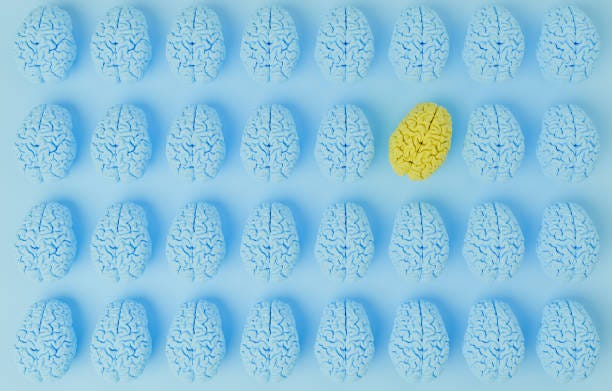
In other words, people mask because the world around them expects one way of being. That’s the same assumption the January question exposes, just with far higher stakes. And masking is only one of the gaps between what we see and what someone is experiencing. Sometimes the gap isn’t about appearing a certain way. It’s about getting started at all.
24 adults: When wanting isn’t enough
Imagine knowing you need to get out of bed, having every reason to, and still struggling to make the transition. We might call it procrastination. Some autistic people call it autistic inertia.
In a 2023 study, Rapaport and colleagues interviewed 24 autistic adults about it. Participants described inertia as deeply disabling, but also described the joy of becoming completely immersed in a task. The problem isn’t a lack of intention. The transition itself is the difficult part.
A related experience appears in ADHD communities as waiting mode. You have an appointment at four. It’s nine in the morning, and the day is technically yours, yet starting anything feels risky in case you get absorbed and miss it. So the appointment quietly takes over the entire day. Waiting mode isn’t a formal diagnostic term, but it names something many people recognize: from the outside, an unproductive day; from the inside, five hours spent waiting for one thing to happen.
Both experiences point to the same thing. The clock on the wall reads the same for everyone. But does time itself?
45 papers: The same clock, a different hour
A 2019 review by Casassus and colleagues looked at 45 papers on time perception in autism. The clearest differences weren’t in basic timing but in higher-level tasks, like anticipating transitions or putting events in order.
ADHD looks different. People often describe time blindness: misjudging how long things take, or not feeling a deadline until it arrives. A 2024 meta-analysis by Metcalfe, McFeaters and Voyer found measurable differences in time perception in ADHD across all ages, though results varied between studies.
So one person looks up to find two hours gone, while another spends the same two hours watching the clock. Same clock, different hour. Timers, schedules and reminders can’t add time to the day, but they can make it easier to hold on to.

94.4%: When the world gets too loud
Back to the restaurant. In a study of autistic adults by Crane, Goddard and Pring, 94.4% reported extreme sensory processing in at least one area, and no two profiles looked alike.
For some, noise, light and conversation pile up until a room becomes too much. That can lead to an autistic shutdown, where speaking or responding becomes difficult. You understand the question perfectly and still can’t answer. From outside, it looks like disinterest. It isn’t.
Learning has its own version of this. Someone with dyslexia may understand a subject well but find reading exhausting. Someone with dyscalculia may struggle with numbers others find intuitive. When the effort goes unseen, difficulty gets mistaken for unwillingness.
Back to the comment section
The internet has made it easier to share experiences that once felt private. People find words like masking, waiting mode and time blindness, and discover that others recognize them too.
That matters. But relating to a post isn’t a diagnosis. Not everyone who loses track of time has ADHD, and not everyone who dislikes loud rooms is autistic.
The point isn’t to turn habits into symptoms. It’s to question what we assume about them. When someone struggles to start a task, do we decide they don’t care? When someone asks for written instructions, do we see a different way of processing, or a failure to keep up? We don’t need to know someone’s diagnosis to accept that they might experience the same moment differently.
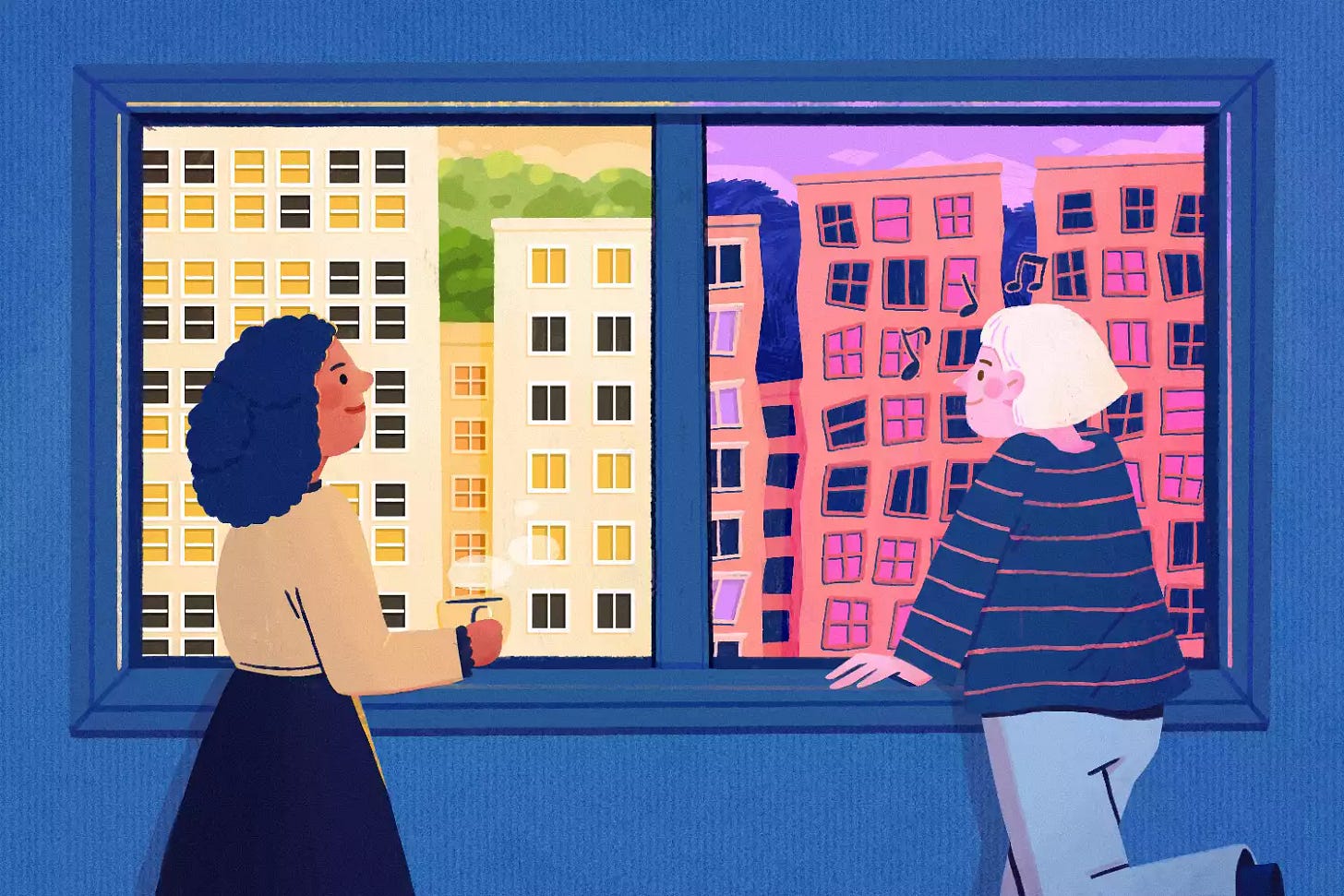
So, what color is January?
I started with a question that seemed too small to matter. Nobody’s life falls apart because they think Wednesday is yellow and their friend thinks it’s purple.
But the question led somewhere bigger. We move through the world on shared words, shared clocks, shared calendars and shared expectations. Those systems make life possible, and they also make our differences easy to overlook. We assume that if something is simple for us, it is simple for everyone. That if we can ignore a sound, so can the next person. That an hour feels like an hour to all of us.
Maybe that’s why the January thread felt so joyful. For a moment, an invisible part of someone’s inner world became shareable. But there is something just as valuable in discovering that someone else doesn’t experience things the way we do, and in not rushing to translate their experience into ours.
So, what color is January? I still don’t know if everyone who says blue means the same blue I do.
That might be the answer. We can share a world without experiencing every part of it the same way. And the next time someone tells us that something ordinary to us feels entirely different to them, we can resist deciding what their experience ought to be.