
Why the Internet Has No Benches (Yet)
Why does so much of the internet feel like somewhere you pass through, and so little of it feel like somewhere you can just be?

The Internet Has No Benches
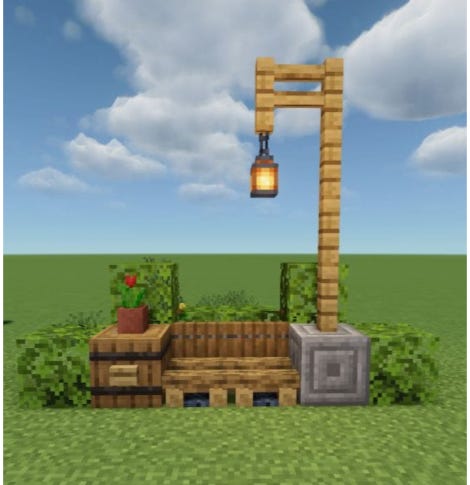
Someone on the internet said “the internet has no benches,” and I rolled my eyes. Then I couldn’t stop noticing it.
Picture a park bench. You sit down. A dog walks past in a nicer jacket than yours. A kid drops an ice cream and the whole bench goes quiet out of respect. Nobody asks you to like, comment, share or subscribe. You’re allowed to just... sit there.
Now picture the internet. Open any app, and within about four seconds something wants you to watch it, buy it, reply to it, or learn a new skill from it in 60 seconds. You hop between five tabs, close everything, and somehow feel like you went nowhere.
So maybe the internet isn’t short on things to do. Maybe it’s short on places where you don’t have to do anything. Maybe what we’re missing is a fourth space (more on that later).
And funnily enough, someone actually built an internet bench once. Back in 2001. We’ll get there.
So who said it first?
The phrase comes from an essay by Spencer Chang, The Internet Has No Benches. And no, he isn’t telling anyone to delete their apps and go touch grass.
He’s imagining a different internet: small digital neighborhoods, run-ins you didn’t plan, and places you can drop into without a to-do list.
The offline world gives us this for free. Sit in a café and you’ve got options. Chat with the person next to you, overhear the table behind you (we all do it), read, or stare out of the window like you’re in a music video. You’re part of the room without being the main character.
Chang calls this ambient participation. I didn’t have a name for it back then, but I’d been doing it for years. More on that in a bit.
Online, though, the menu is weirdly short: stay invisible, or post something and hope 12 people see it and not 12,000.
Real life has a whole range in between. Lurk a little before speaking. Show up regularly without saying much. Recognize the familiar faces. Jump in when you feel like it.
That’s what a bench is for. A bench isn’t just a seat. It’s equipment for being around people without making yourself the show.
Some corners already have benches
Here’s the fun part: bits of the internet have already figured this out.
A Discord server, a tiny subreddit, an old-school forum, your gaming squad, even the family WhatsApp group (good morning flowers included). These places grow their own slang, running jokes, familiar usernames and lore. You go back not for new content, but because you know who’s probably around.
Look closely and you’ll spot benches everywhere. Lo-fi study livestreams, where thousands of strangers sit in the same stream doing their own thing, and someone types “back from chai” into the chat. “Study with me” sessions, where people work quietly on camera together. Discord voice channels full of people who are muted, half-present, and completely happy about it. And if you were online a little earlier, you’ll remember Orkut scrapbooks, Habbo Hotel and old chat rooms: places people went just to be there.
That’s the difference between a space and a place. A space is somewhere you can go. A place is somewhere that starts to mean something to you.
Researchers have a name for the offline version: third places, the hangouts that aren’t home or work, like cafés, parks and the neighborhood chai stall. People have also studied whether online communities can do the same job, giving you regular faces, conversation and a sense of belonging. Short answer: they can.
Not every group gets there, of course. Some are purely transactional, some are toxic, and some vanish the moment the algorithm stops sending people. But a place doesn’t need walls to become a place.
Mine was Amino.
If you never used it: it was an app full of tiny communities for everything you could think of. I was in a ridiculous number of group chats. Indian ones, art, painting, drawing, anime, music, you name it. I’d post my drawings there, and people would actually stop and react, the way regulars at a café notice the new thing on your table.
But my favorite part was the voice chats. In college, whenever I had an assignment due or a project that needed an all-nighter, I’d join a random VC, put my head down and just work. I wasn’t really talking. I was just listening to people chat about their day, their art, whatever. It kept me awake, kept me from getting bored, and somehow made 3 a.m. feel a lot less lonely.
That was my bench. I didn’t need to say anything to be there.
In December 2025, Amino quietly disappeared from the app stores. No big goodbye. The chats, the posts, the drawings, all gone.
But here’s the thing. The people didn’t disappear. It’s been seven or eight years, and I’m still in touch with the friends I made there. One of them got me a job through his referral. A few have gotten married. Some have started their own businesses. We still send each other updates whenever something new happens.
The park closed. The people who used to sit on that bench are still around.
Lots of roads, not many neighborhoods
So if the internet already has these little pockets, why does most of it still feel like a blur?
Because most of it is built to keep you moving. Big platforms are brilliant at “what’s next.” One video leads to another, the feed refreshes, and auto-play kicks in before you’ve even decided.
And discovery is genuinely great. Bumping into people and ideas you’d never meet offline is one of the internet’s best tricks.
But a road and a neighborhood are different things.
A road gets you somewhere. A neighborhood gives you a reason to stick around.
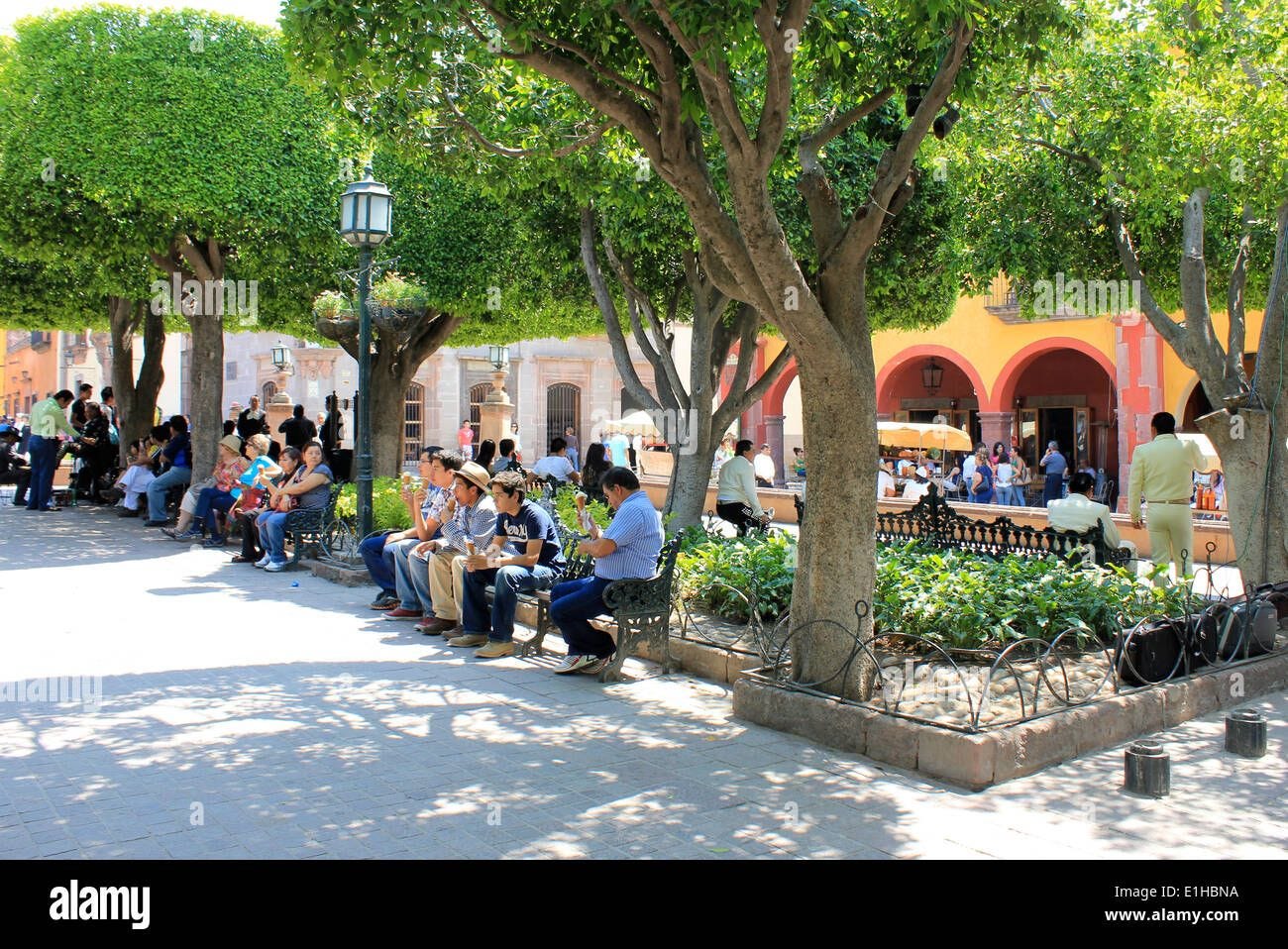
Chang’s idea of building tiny internets is about designing for the second one. A website that doesn’t throw infinite content at you, and instead gives you something to do together, a small gathering, or a spot where familiar people happen to cross paths.
He also talks about traces: the feeling that a place remembers you were there, so coming back feels like returning, not signing up for the first time all over again.
Offline places do this without trying. The café knows your order. The park has that one corner where the same group always sits. A bench has hosted thousands of strangers, and the worn paint quietly keeps a record of all of them.
Online, we prove we were somewhere through profiles, posts, likes and follower counts. What if a digital place remembered you in quieter ways, through shared history, inside jokes, or things everyone made together?
Not every corner needs to work like this. Sometimes you just want to look something up and leave. We’ve got plenty of places for finding things and broadcasting things. What we’re short on are places for just hanging around, near things and near each other.
Pick your dose of internet
Before anyone starts building benches, though, it helps to know that people want wildly different amounts of internet.
The Amish usually get filed under “people who don’t do technology,” but the real story is more interesting. Different Amish communities decide tool by tool what gets in, checking each one against the kind of life they want to keep. Being convenient isn’t enough to get through the door. The tool has to fit the life, not the other way round. Basically, the strictest app store in the world.

On the other end, there’s hikikomori, a Japanese term for people who pull back from social life for long stretches. It isn’t simply “too much internet,” and the reasons are complicated. But for some of them, the internet stays the one window that’s still open, a way to keep in touch with the world when school, work or meeting people has become hard.
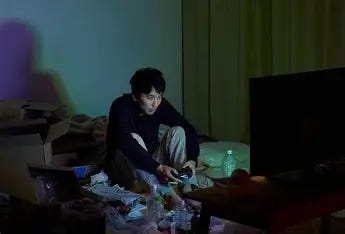
Two completely different stories. One community keeps tech at arm’s length on purpose. For others, a screen is how the outside world still gets in.
Most of us live somewhere in between, often within the same hour: replying to work mail, learning something, laughing at a meme, scrolling till midnight. And then wondering where the evening went.
So the real question isn’t online or offline. It’s whether the places we hang out online are giving us anything back.
Home, work, café... and?
Third places explain why some online communities feel like home. But I kept wondering if we’re squeezing something new into an old box.
What if there’s a fourth space? To be clear, this isn’t an official sociology term. I’m just playing with the idea.
Picture a website that’s basically a quiet room. You can see a few familiar names drifting around. Some people are chatting, some are drawing, some are just there with their metaphorical camera off. Nobody’s counting your likes. You can leave for a week and come back to the same seat. Sometimes you bump into someone you didn’t expect, and it’s nice.
Maybe that’s just a third place with better Wi-Fi. Maybe it’s something new. The name matters less than the feeling.
It’s funny how much we argue about what the internet should show us, and how little we talk about what it should feel like to hang out there.
The bench has been here before
Now, about that 2001 bench.
On 6 August 2001, Bury St Edmunds, a town in England, opened the world’s first park bench with free internet access. MSN took a regular park bench and rigged it so four people could plug in their laptops at the same time. Outside. On a bench. It even got a Guinness World Record.
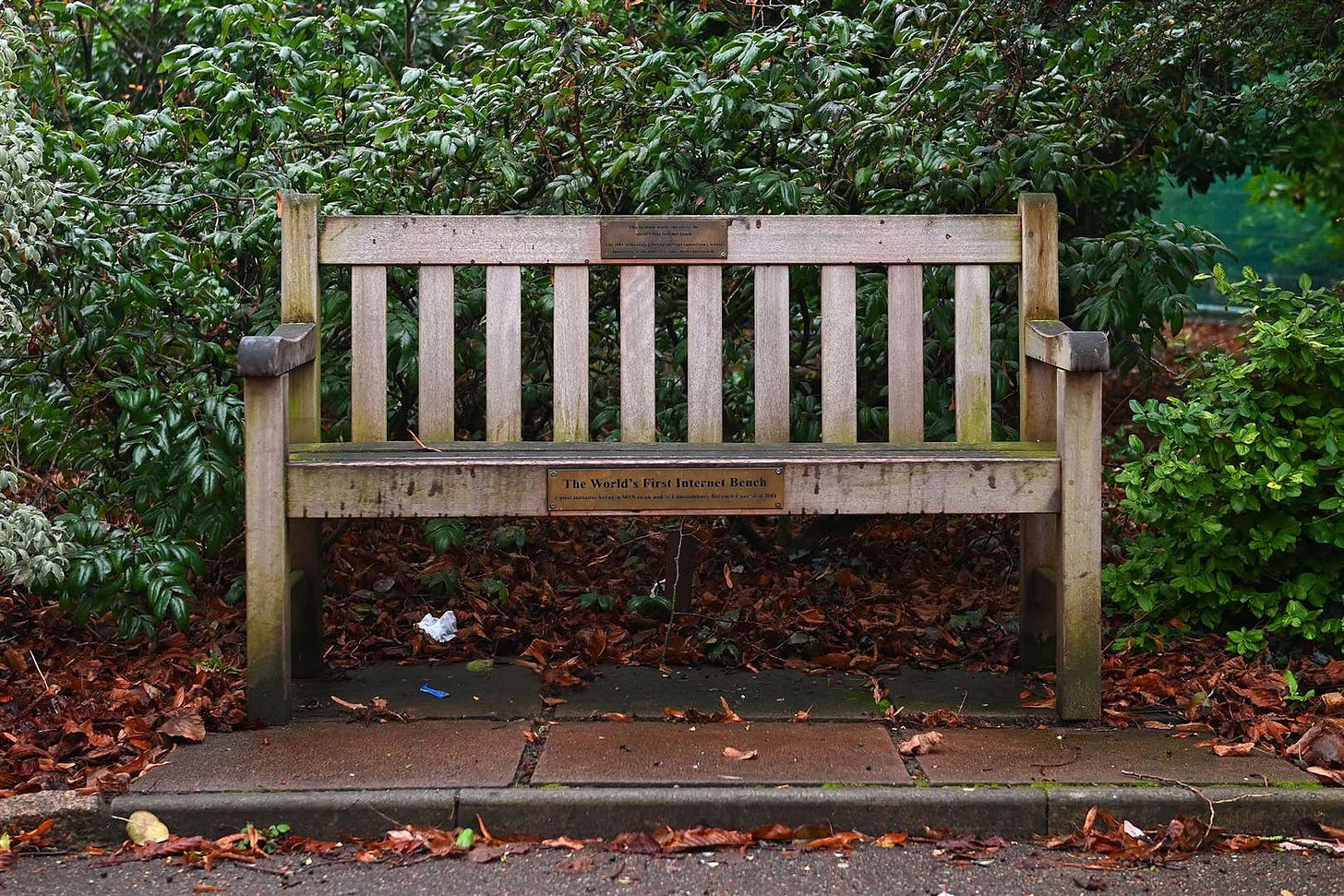
If you were around in 2001, sit with that for a second. The internet back then lived on one family computer in the corner of the living room, every session started with that screechy dial-up song, and someone picking up the landline could knock you offline. And here was a town saying: come to the park, bring your laptop, plug in.
Tech like that doesn’t stay new for long, and these days it would just be a bench again. Benches come and go. The people who sat on them tend to stick around.
But look at how it’s flipped. In 2001, someone built a bench to bring the internet into the park. In 2026, we’re trying to work out how to make the internet feel a bit more like a park.
We spent twenty-five years making it possible to get online from anywhere. Now we’re working on making “being online” feel like being somewhere.
Maybe the internet doesn’t need fewer people, less creativity, or even less screen time. Maybe it needs more ways to just be there, without consuming, posting, or proving anything.
A place to talk. A place to watch. A place to make stuff. A place to come back to. And every now and then, a place to do absolutely nothing.
Maybe the internet doesn’t need more content.
Maybe it needs more benches.
So, where’s your bench online? Or where was it? Tell me in the comments.