
The Reason Economy
Coincidence and belonging used to happen by accident. Now it’s something people design, fund, and sell.

A (working) hospital in Bengaluru became a party venue.

Not exactly the sentence you expect to read on a Wednesday morning. A music and PR event was held right on the premises, the videos went viral, and naturally the internet had opinions. Some called it bizarre and insensitive. Others saw a hospital trying, for one evening, to feel like something other than the place you only walk into when something has gone wrong. Everyone argued about noise and patients and where fun should be allowed to happen. I kept getting stuck on a much smaller question: why were people there in the first place?
Not why in a hospital. Why gather at all?
I did what I usually do with a question like that. I overthought it.
A little later, I came across something even stranger. People were attending weddings where nobody was getting married. “A Fake Sangeet.” Music, dancing, outfits, the unmistakable energy of an Indian wedding. Just no wedding.
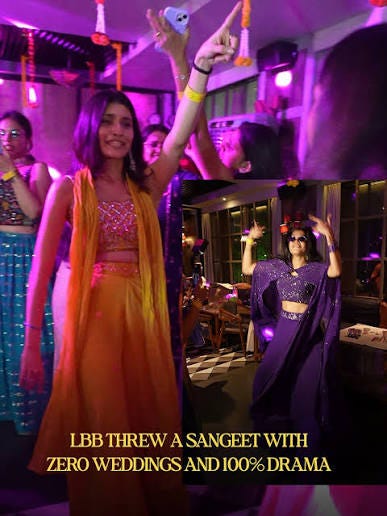
It sounded ridiculous for a second. Then it made sense. A wedding is, among other things, an extremely elaborate reason to get a large group of people into one place. Remove the wedding, keep the reason, and you get a fake one.
Then I found Odd Tables. No hospital, no wedding, not even a shared hobby this time. Just dinner. Six people who don’t know each other, one table. That’s it. And somehow that felt stranger to me than the fake wedding.
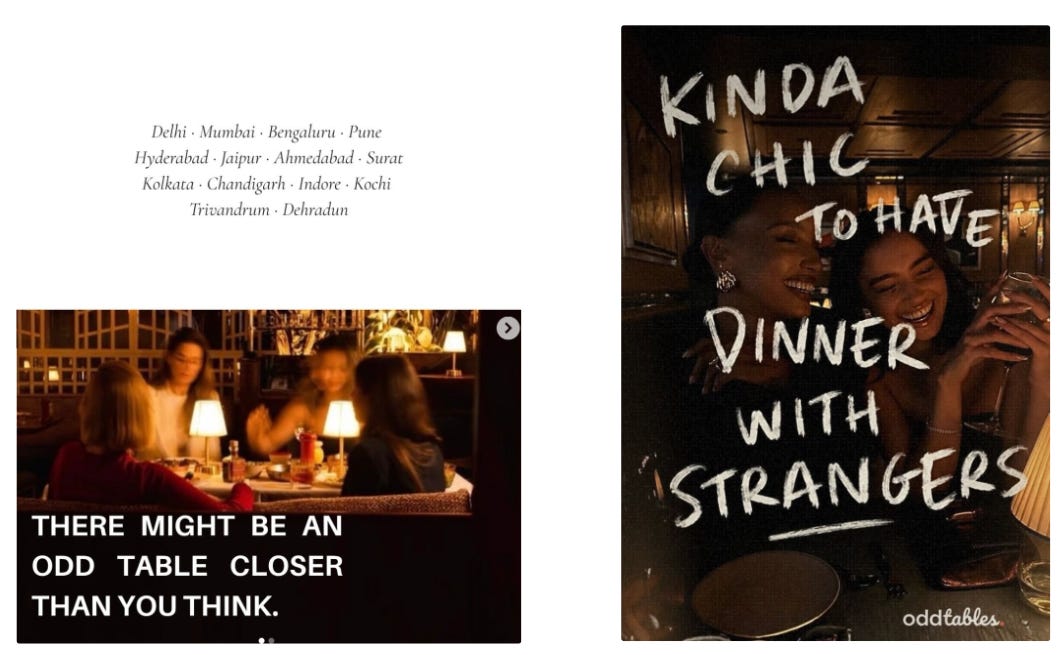
Hear me out. We used to meet people by accident. You sat next to someone, started talking, and eventually they became part of your life. Now there are services that recreate the accident. Someone has to manufacture the coincidence. My first reaction was whatt is even this!!? My second was a quieter kind of understanding. Maybe that’s what cities have done to us. Millions of people around us, and we still need an invitation to meet one.
Then I found a Repair Café. People bring broken things, someone knows how to fix them, and everyone sits around and works on them together. A bicycle, a toaster, a wobbly chair. That object is the official reason for being there. But nobody really comes because they love broken toasters. They come because fixing something gives them something to do together.
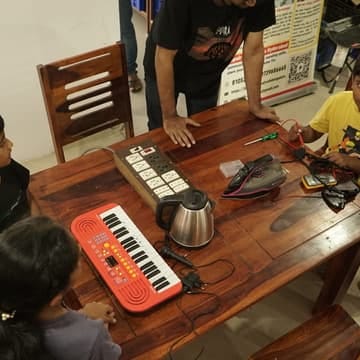
That’s when the pattern got hard to ignore. Four completely different activities, all doing something strangely similar. They were giving people a reason to show up.
And once I started noticing the reasons, I started noticing who was handing them out.
Somewhere along the way, it stopped being only friends with a WhatsApp group and a free Saturday. Brands figured it out. Labs figured it out. Investors figured it out. If you can give a very specific group of people a reason to be in the same room, you’ve built something more valuable than an ad. And the more I looked, the more the communities I found sorted themselves into two piles.
Community as a Third Space
Home is the first place, work is the second, and the third is wherever you go that’s neither. The café, the adda, the chai tapri you end up at every evening without ever deciding to. Lossfunk is the one that made this click for me.
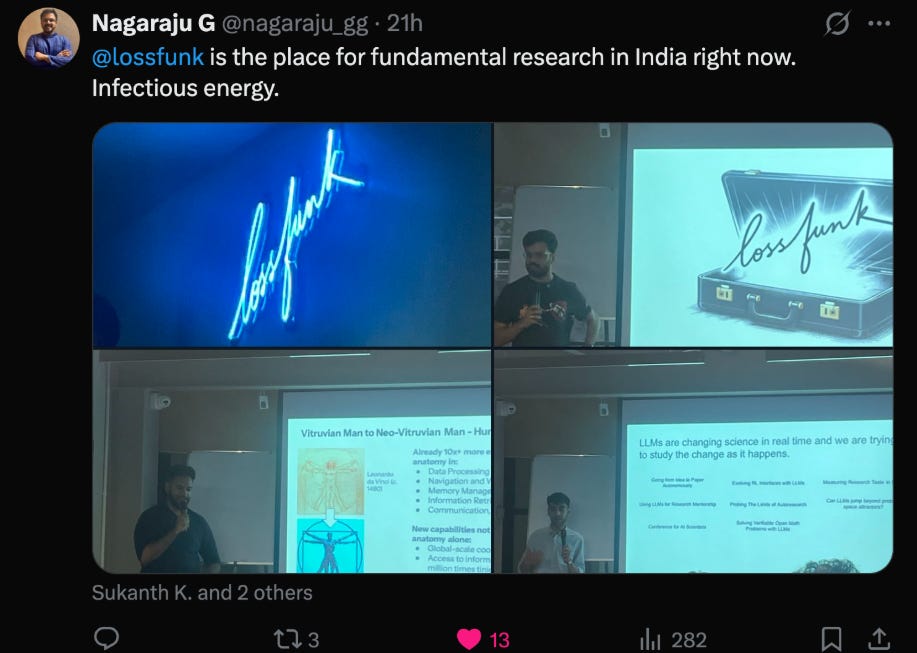
It’s an AI lab in Bangalore, described as a third space for Indian AI, sitting outside both industry and academia. The idea is a cosy home for independent researchers, where undergrads, PhDs and people who are just curious can ask big foundational questions without the pressure of a product roadmap or a tenure clock.
What gets me is how niche the reason is. You don’t show up to Lossfunk because it’s fun on a Friday. You show up because you can’t stop thinking about what intelligence actually is, and you’ve finally found other people who can’t stop either. The reason is a question. The room is the answer to “is anyone else thinking about this?”
Community as a Service
This is where it gets literal.
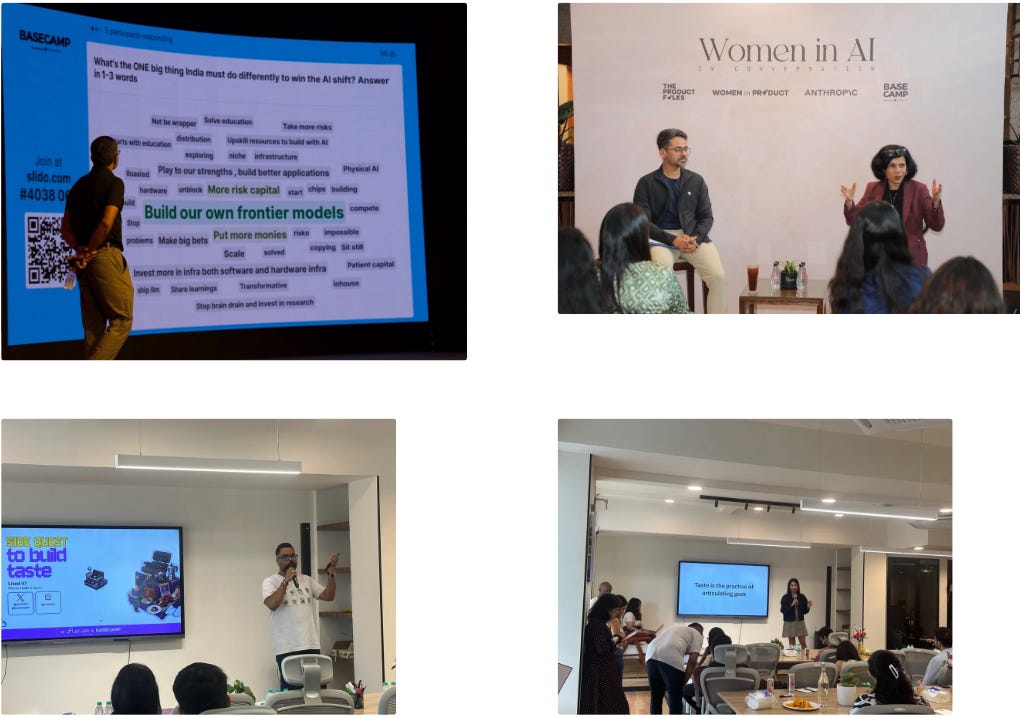
Elevation Capital’s Basecamp Week was a pretty massive coming-together of Bengaluru’s startup community — 9,000+ founders, operators and builders, across 100 events over a week. There was everything from AI and deep tech to fundraising, product and just getting people from the ecosystem in the same room. One of those research showcases was hosted by Lossfunk, which I found oddly satisfying: the third space plugged straight into the service.
This is community at scale. Not six people at one table. A whole city, rearranged for a week, handing out reasons in every neighborhood. And the reasons worked. One hackathon that week was announced just 48 hours before it happened and still pulled in 6,272 applications for 100 spots.
I sat with that number for a while. Six thousand people wanted in. A hundred got in. Is that a community or a filter?
And then I read that Basecamp is described as both a community platform and a sourcing platform for the firm. Which, honestly, makes complete sense. A VC fund finding the next great founder by inviting the whole city to show up is a very smart way to find the next great founder.
Ben Lang has spent most of his career doing this for companies. He led community at Notion for nearly five years, then joined Cursor early. When Cursor was acquired, he wrote about what he’d learned: there were fewer than 30 people on the team when Cursor passed $100M in annualized revenue, and some people got hired by being helpful in the community or building standout projects. His own takeaway was that building community for a startup in the early days is more like an art than a science. The community wasn’t just the audience. It was also where the team came from.
But it made me overthink the whole thing again. Because my brain started doing the thing it does with every viral video. Assigning roles. Who’s the hero here? Is the VC the hero for opening a week of free rooms to anyone who wants to walk in? Or the villain for knowing exactly who it hopes will walk in? Is the hospital the hero for letting music into a building that’s usually all fluorescent lights and waiting, or the villain for letting noise into a place where people are trying to heal? Is the fake sangeet a clever answer to loneliness or a slightly sad commentary on it?
I kept trying to pick. I couldn’t.
Maybe because these aren’t two different stories. They’re two sides of the same coin, and the coin is the reason. On one side there’s the invitation: come, sit, dance, fix, build. On the other side there’s the intention: whoever sends an invitation usually wants something back. A fake sangeet sells tickets. Odd Tables has a business to run. A Repair Café wants fewer things thrown away. A VC wants to meet the next founder before anyone else does. That doesn’t make the invitation fake. It just means every invitation has a back side, and which face you see depends on where you’re standing.
Which brings me to the part I find most interesting. Basecamp is community as a service in the most literal sense. Structured, funded, programmed, with a purpose you could put on a slide. The fake sangeet is also a service, but its reason is almost completely random. There’s no strategy behind dancing at a wedding that doesn’t exist. It’s a joke that people agreed to take seriously for a night.
And yet. The person who met their co-founder at a Basecamp treasure hunt and the person who met their best friend at a fake sangeet both left with the same thing. The service decided the reason. It didn’t decide what happened next.
That part stays unpredictable. Whether you build it for a brand, a lab, a fund, or a laugh.
So, What is a “Good Community”?
Definitely slippery.
We tend to assume that if people come together, the result must be good. The hospital makes it obvious that it isn’t that simple.
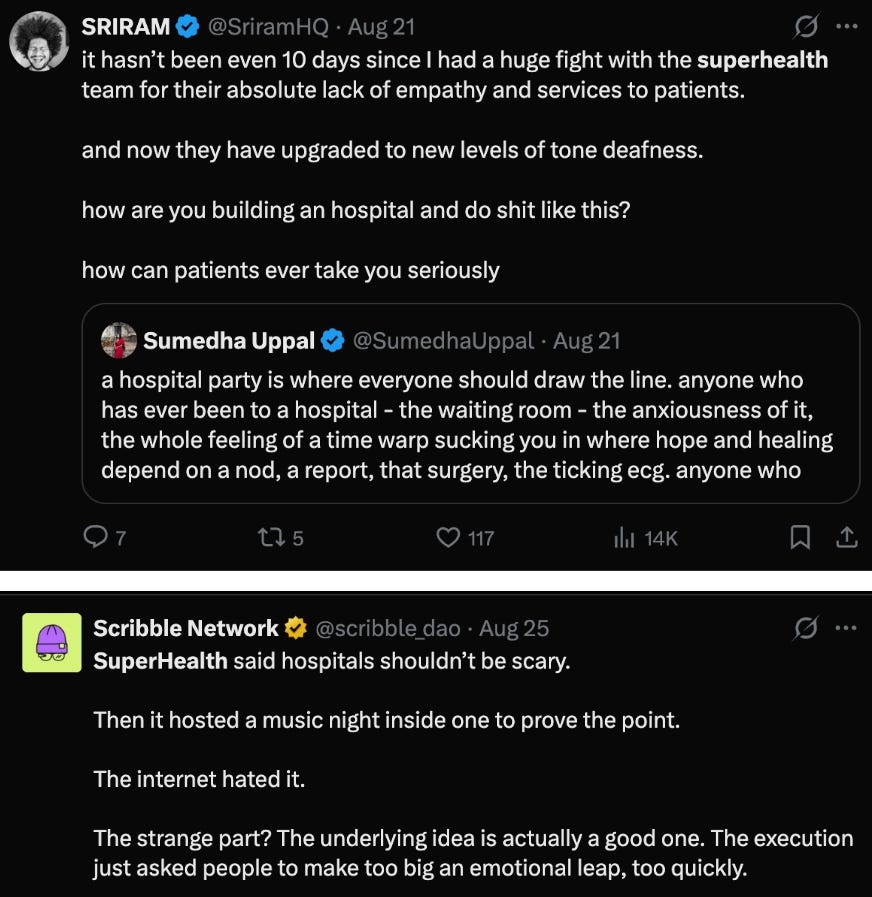
So who gets to decide? The people inside? The people outside? The organisers? The internet?
We’re very good at picking a hero and a villain, and then forgetting both. One video, everyone has an opinion, and a few days later another story takes over. The hospital becomes a hospital again. The fake wedding disappears from the feed. Basecamp becomes a line on a few LinkedIn profiles.
Except for the people who were actually there. They’re still carrying whatever happened. Maybe nothing. Maybe everything.
Then there’s the side of community that rarely makes the story: what happens when everyone stops showing up. Communities don’t usually end dramatically. They just get quieter. Like how our WhatsApp group goes from fifty messages a day to three. Then one. Then someone’s birthday message. Then nothing. People move cities. Organisers get tired. Interests change. Even communities that once seemed enormous disappear. BlueLearn grew from a student community into a large online network before shutting down in 2024.
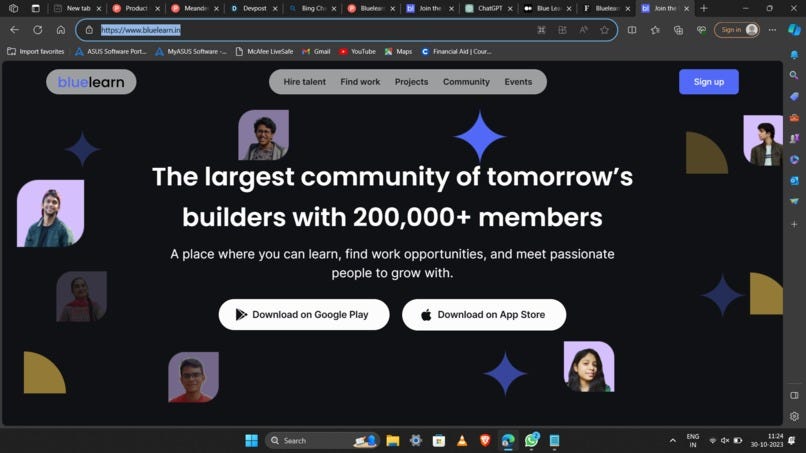
The community disappeared. The people didn’t.
Which makes it kind of wild that anyone starts one at all. Someone has to send the first message. Someone has to book the venue, or a whole city’s worth of venues. Someone has to bring the broken toaster. Someone has to say: “What if we tried this?” And someone else has to answer: “Sure. I’m in.”
So maybe this was never really a story about communities. It’s about reasons. We keep inventing them. A reason to dance, a reason to leave the house, a reason to sit next to someone you’ve never met, a reason to finally find the people who can’t stop thinking about the same question you can’t. Some come with a business model attached. Some come with no logic at all. I’ve stopped trying to decide which ones are the heroes.
Community has never really started with people who already belong together. It starts with someone giving them a reason to meet.